
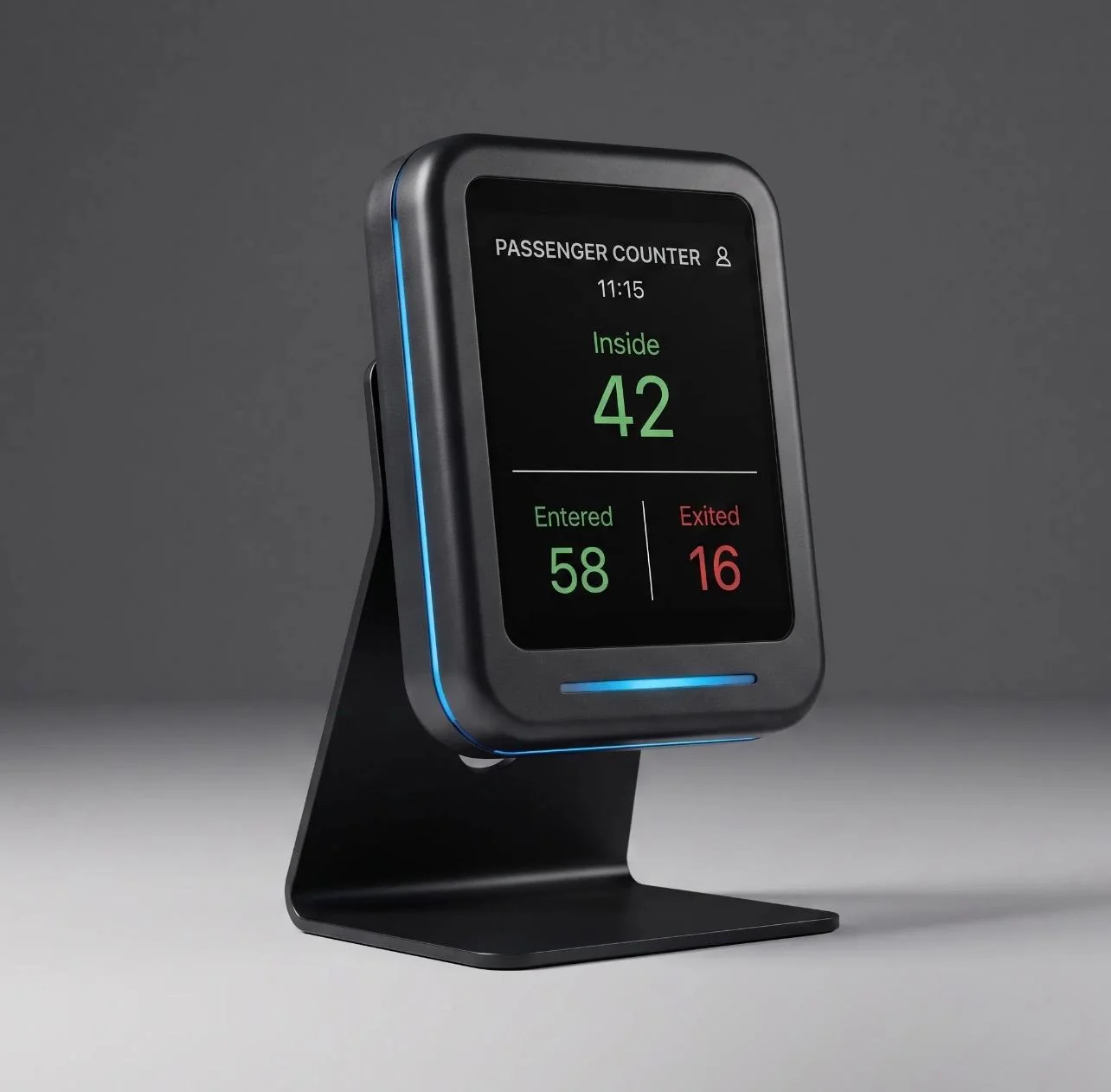
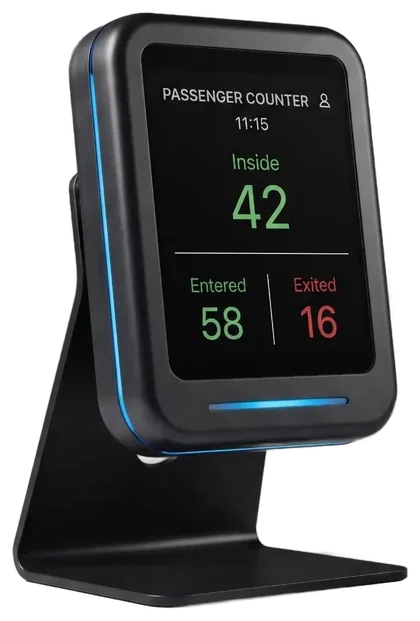
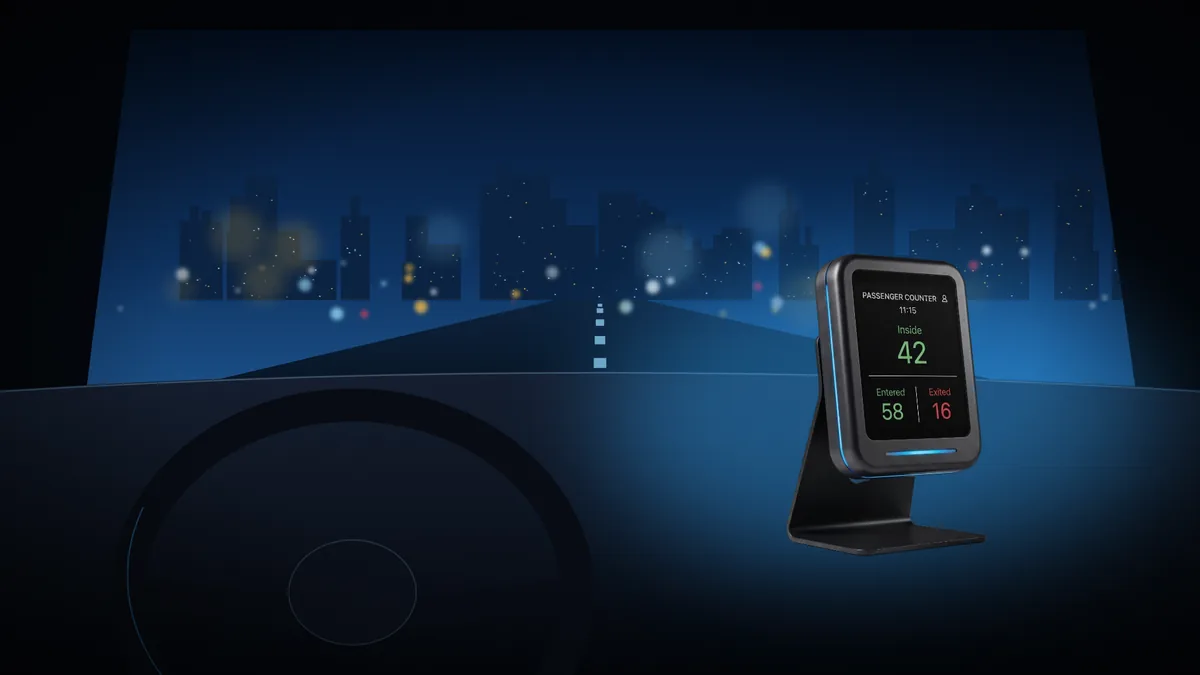
Driver display
A clear view of passenger activity throughout the journey.
- Live passenger total
- Separate entered and exited counts
- Driver-facing interface
Last 1 | School bus safety system, Bahrain
A Bahrain-developed smart bus safety system that counts every entry and exit, and alerts the driver if anyone remains onboard.
Children are at risk of being accidentally left inside buses due to reliance on manual checks that are prone to human error. Drivers may close vehicles without confirmed passenger clearance, and current systems lack real-time verification.
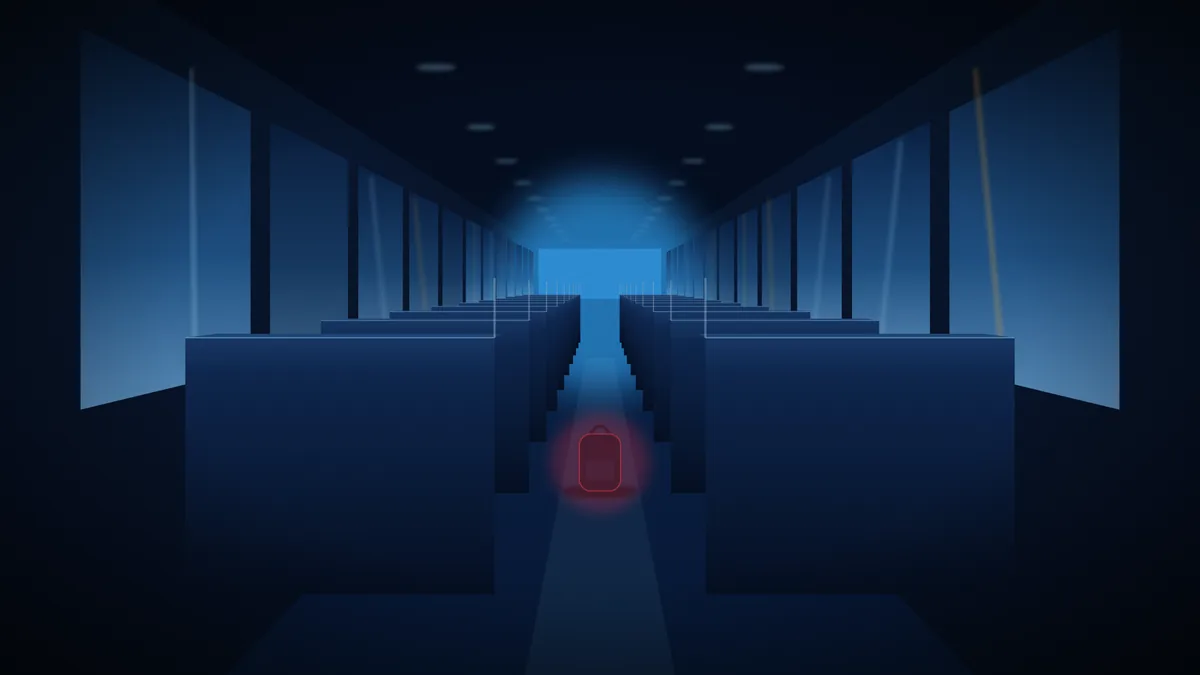
A sleeping or quiet child may not be visible from the driver's seat.
Reminder alarms still depend on a person completing the check correctly.
Paper registers and app check-ins do not confirm physical presence inside the vehicle.
A single missed check can create severe safety, legal, and reputational consequences.
Safety should not depend only on memory.
The Last 1 principle. The system verifies that every recorded entry is matched by an exit, and clearly alerts the driver when the final count is not zero.
How it works
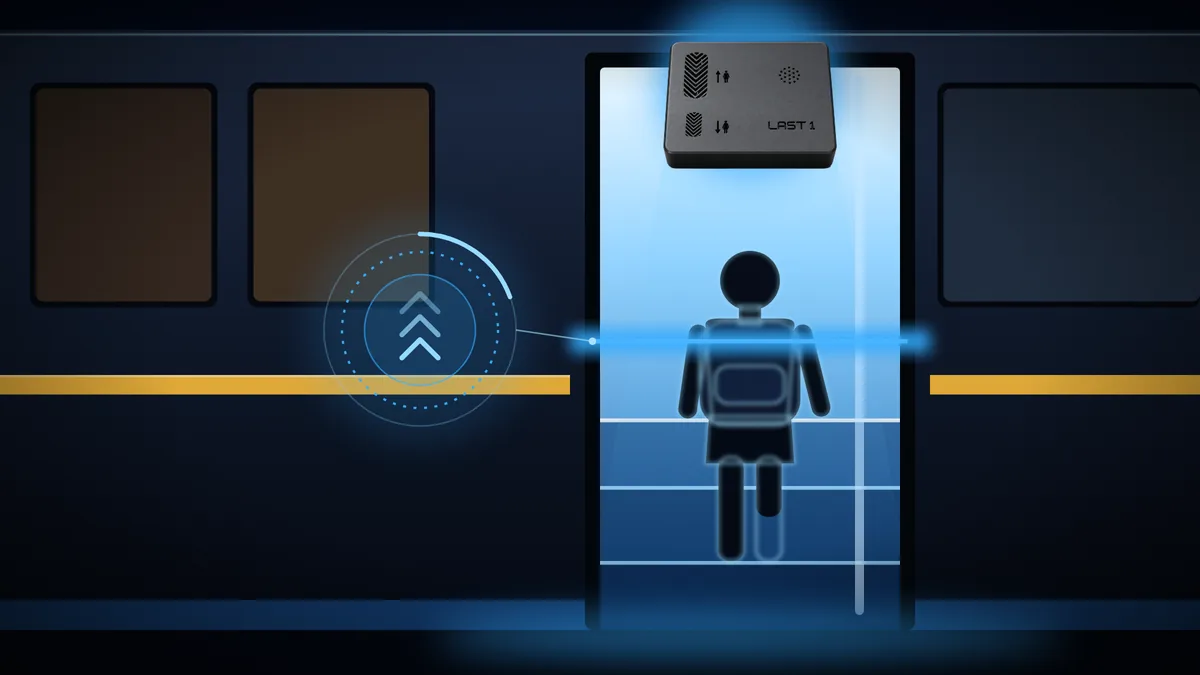
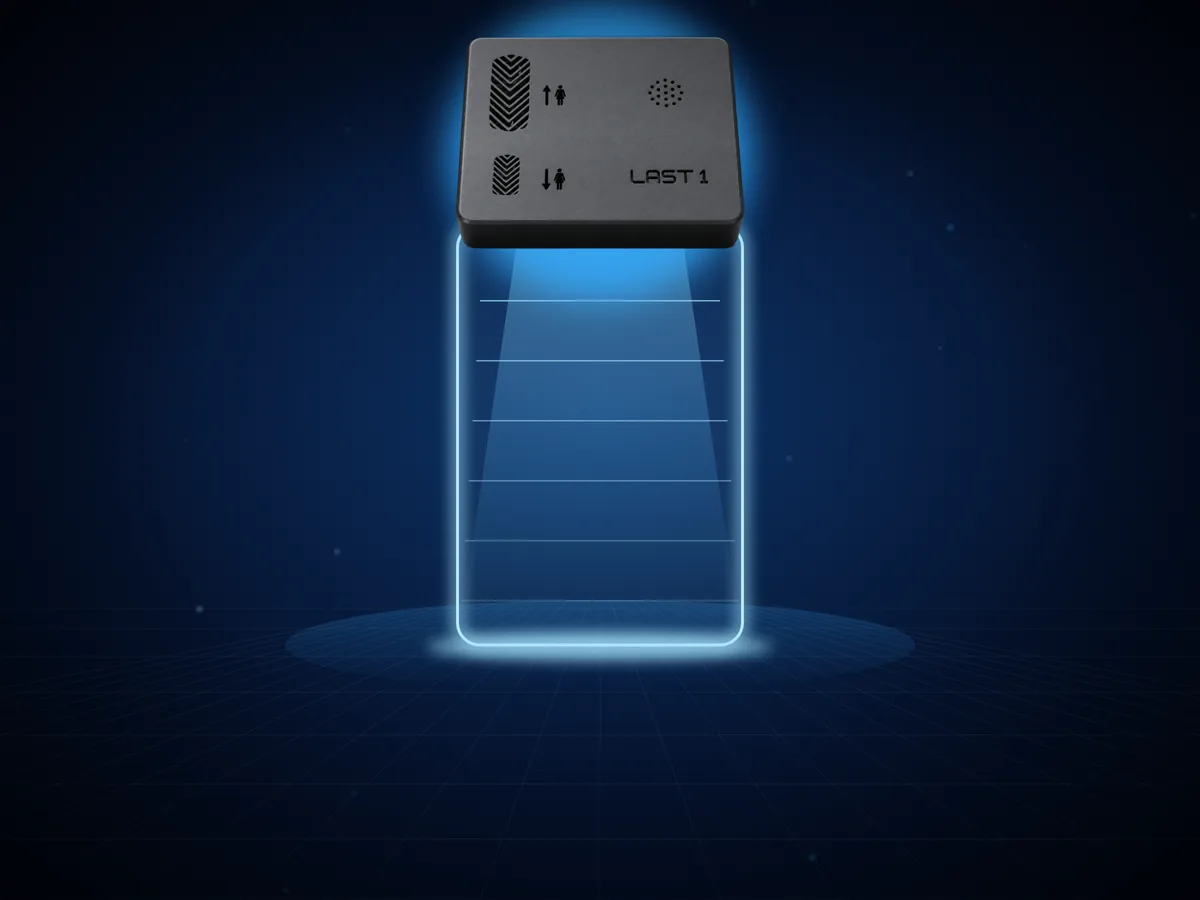
Door-mounted Time-of-Flight sensors identify movement and determine whether a passenger is entering or exiting.

The onboard ESP32 controller reconciles entries and exits continuously throughout the journey.
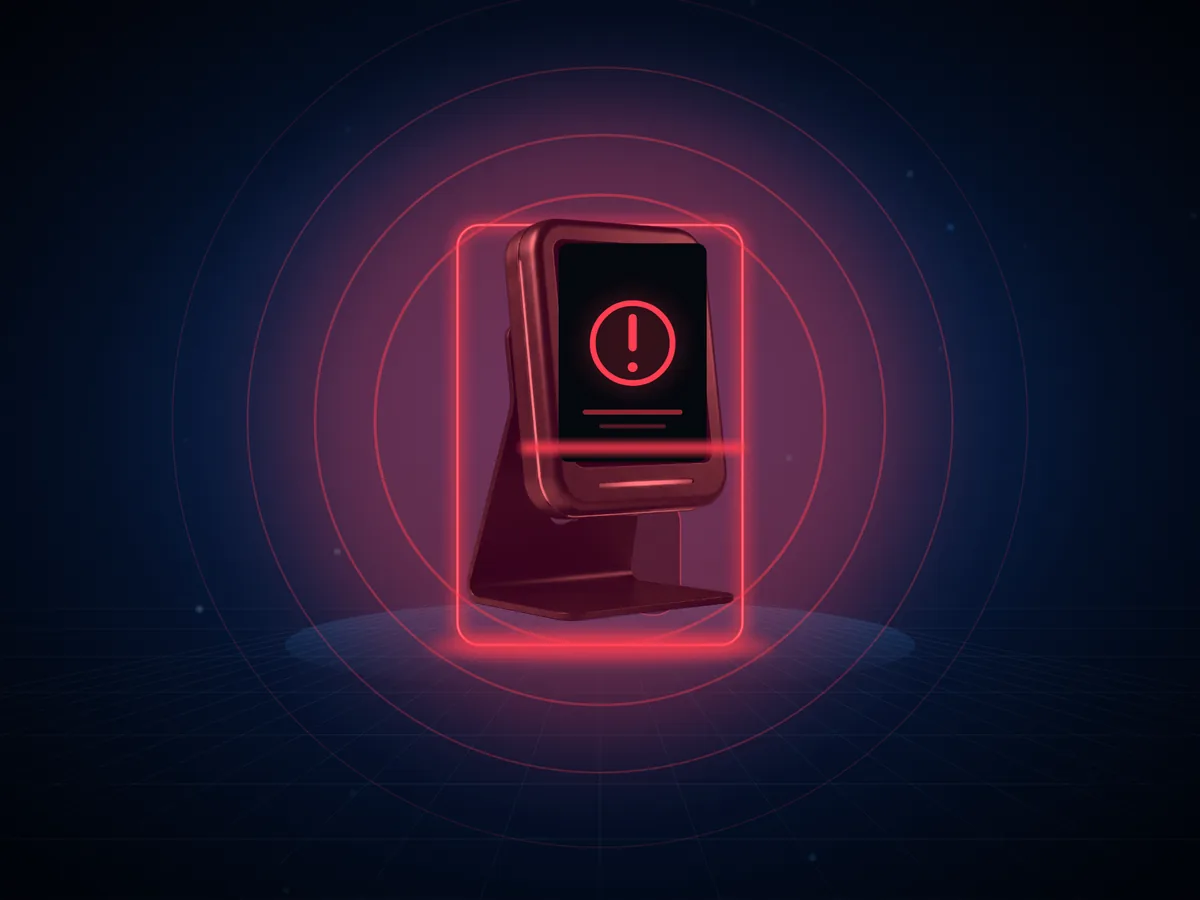
A driver-facing screen shows the live passenger total and the system status: SAFE or ALERT.
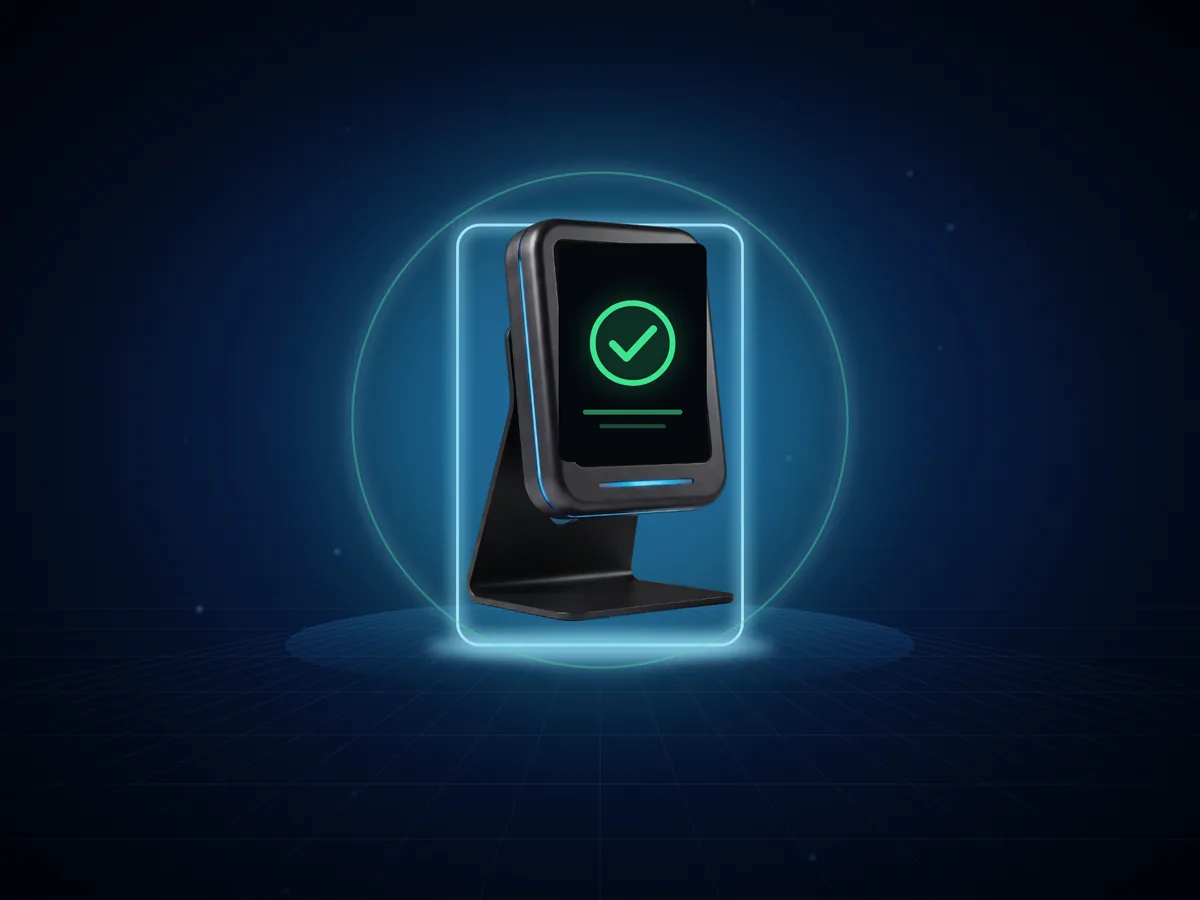
At route completion, the system checks for zero passengers. Any mismatch activates audible and visual alerts and can interface with a closure interlock, subject to vehicle approval and pilot configuration.
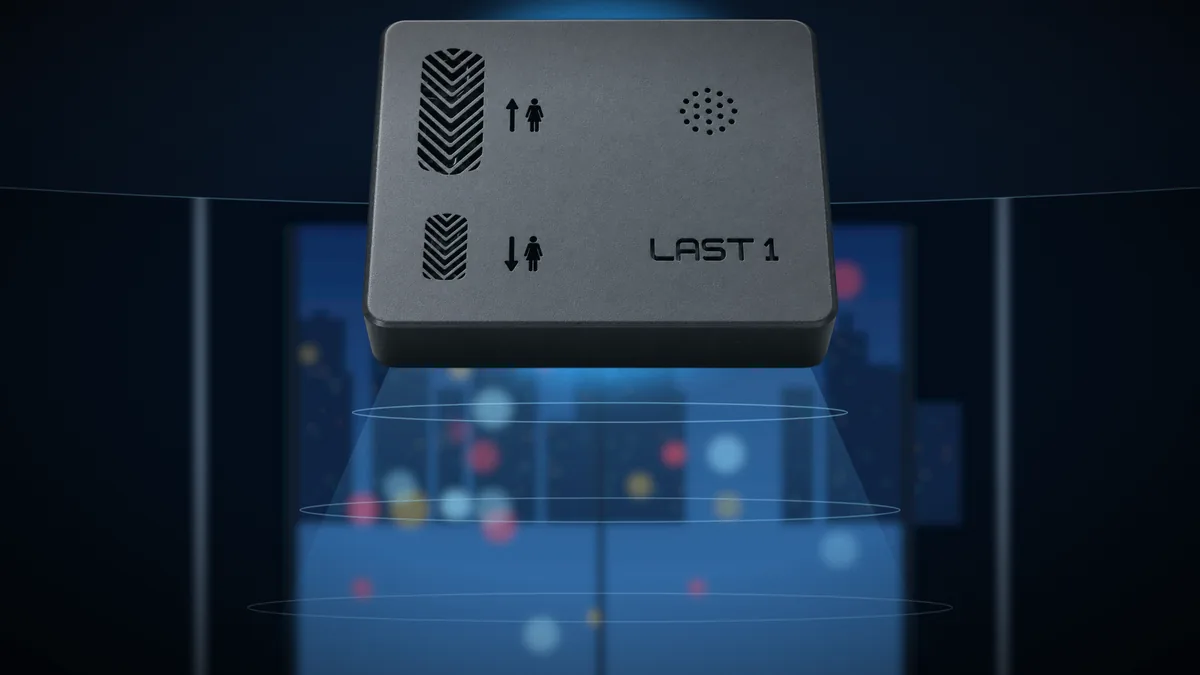
The passenger passes through the door scanner. The entry is detected and recorded, and the display increments the passenger count instantly while the system keeps the onboard total.
The door-mounted scanner detects each passenger exiting. The display automatically decreases the count, and the system continuously compares total entries and exits.
When the driver attempts to close the bus, a final count verification runs. If the count is not zero, the system blocks closure and a loud audible alarm warns that passengers remain inside.
A clear view of passenger activity throughout the journey.
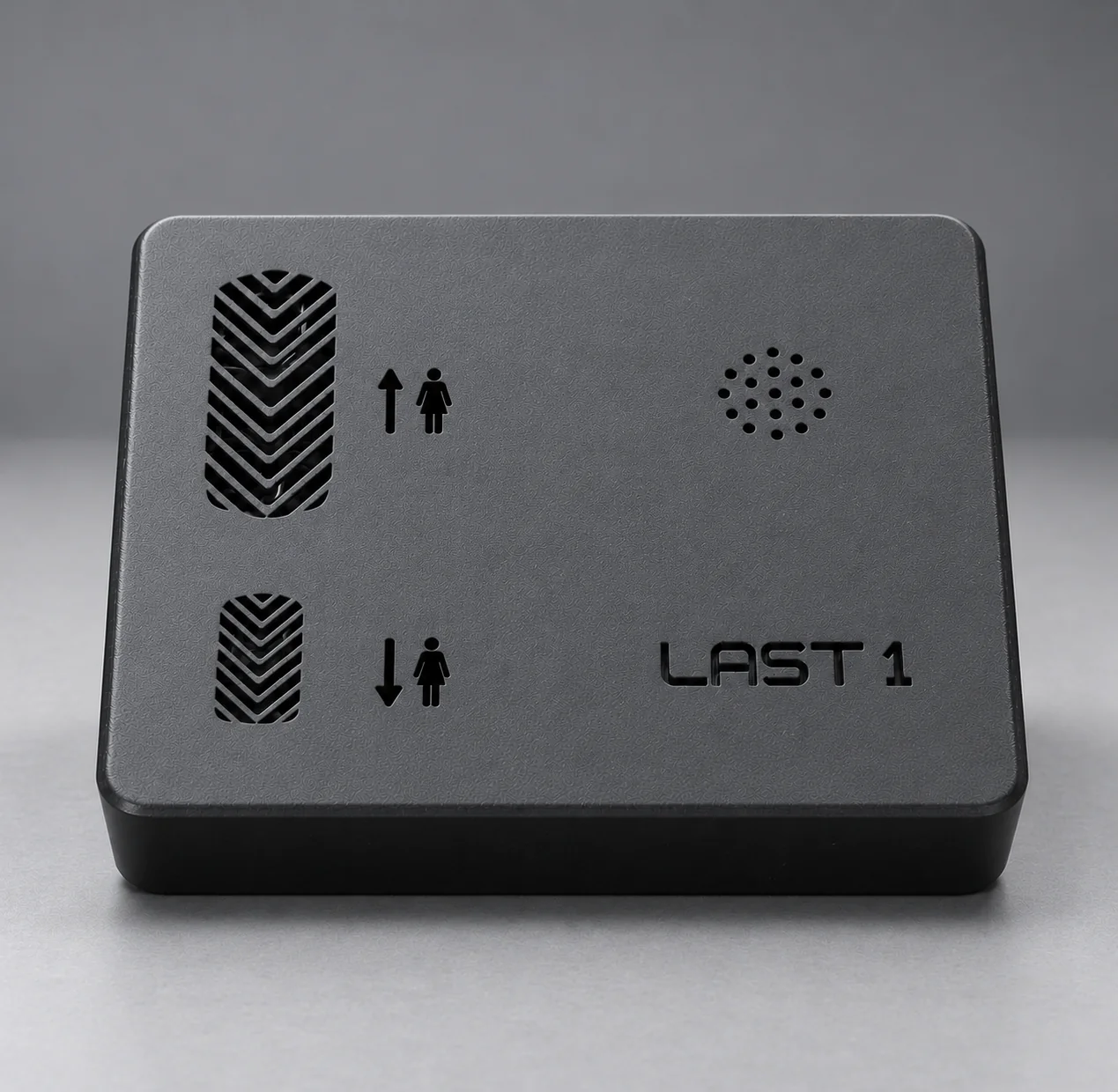
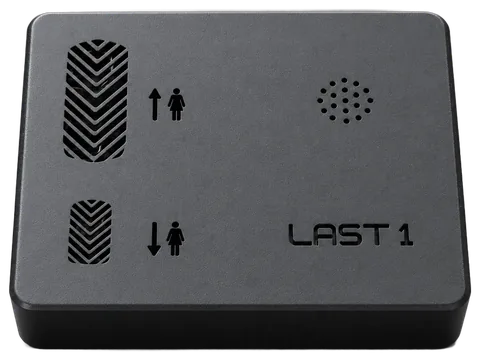
A compact enclosure for the entry and exit sensing unit, with directional entry / exit symbols and a protective housing concept. Mounting is subject to vehicle assessment.
Board and drop off passengers, then end the route. Anything other than zero raises an alert.
The core safety function does not require persistent internet connectivity.
The current design counts anonymous movements rather than capturing names or images.
Designed to integrate with existing fleets, subject to vehicle-specific assessment and approvals.
Product visualisations for presentation purposes. Final hardware, interface and mounting details may change following pilot validation.
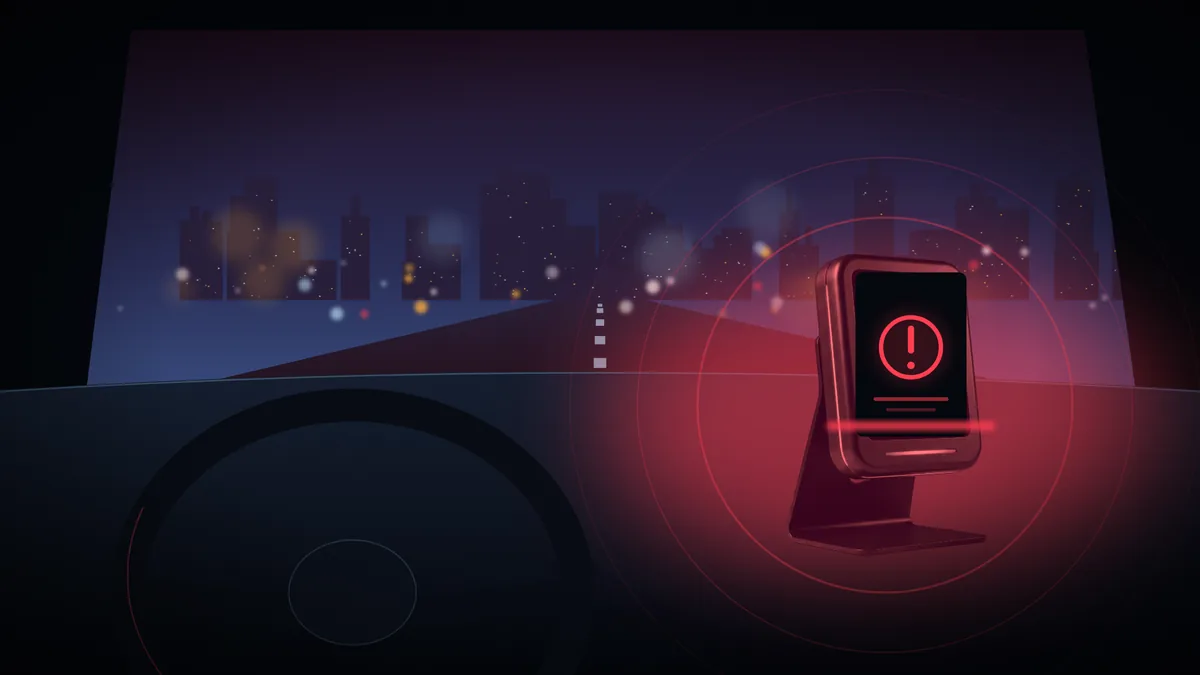
Adds an automated layer of protection at the exact point where manual checks can fail.
Creates a consistent and repeatable end-of-route verification process for drivers and fleet supervisors.
No cards, tags, phones, or passenger actions are required for core counting.
Core safety functions operate locally and do not depend on continuous internet connectivity.
Optional reporting and review services can help management track incidents, maintenance, and compliance actions.
Demonstrates a proactive commitment to transport safety, risk reduction, and stakeholder confidence.


Indicative service packages
10 BHD / month*
15 BHD / month*
20 BHD / month*
*Indicative pricing from the current feasibility model. Final pricing, taxes, installation complexity, replacement terms, contract length, and any custom reporting requirements will be confirmed in a formal proposal.
Passenger entry/exit sensing, live count display, Safe/Alert status, and end-of-route warning logic.
On-site fitting by a qualified electronics/IoT technician, subject to vehicle inspection and agreed installation plan.
Practical orientation on system operation, alert response, daily checks, and escalation procedures.
Scheduled inspection, cleaning, testing, firmware review, and repair support according to the selected service tier.
Optional monthly summaries, incident logs, maintenance status, and fleet-safety review meetings.
Baseline assessment, agreed success criteria, monitored trial period, and end-of-pilot recommendations.
Pilot programme
A pilot lets both parties evaluate the technology, operating process, and service requirements before broader deployment.
Confirm fleet size, bus types, operating routes, safeguarding requirements, and technical constraints.
Inspect selected buses and agree sensor placement, power connection, driver display location, and installation method.
Install the system on an agreed number of buses and conduct driver and supervisor training.
Operate during an agreed trial period, record alerts and user feedback, and complete scheduled technical checks.
Evaluate agreed success measures and prepare a recommendation for refinement, extension, or fleet-wide deployment.
Tell us about your school or transport operation. Mohamed will reply to agree a discovery call, a site assessment of selected buses, and the scope of a pilot installation.
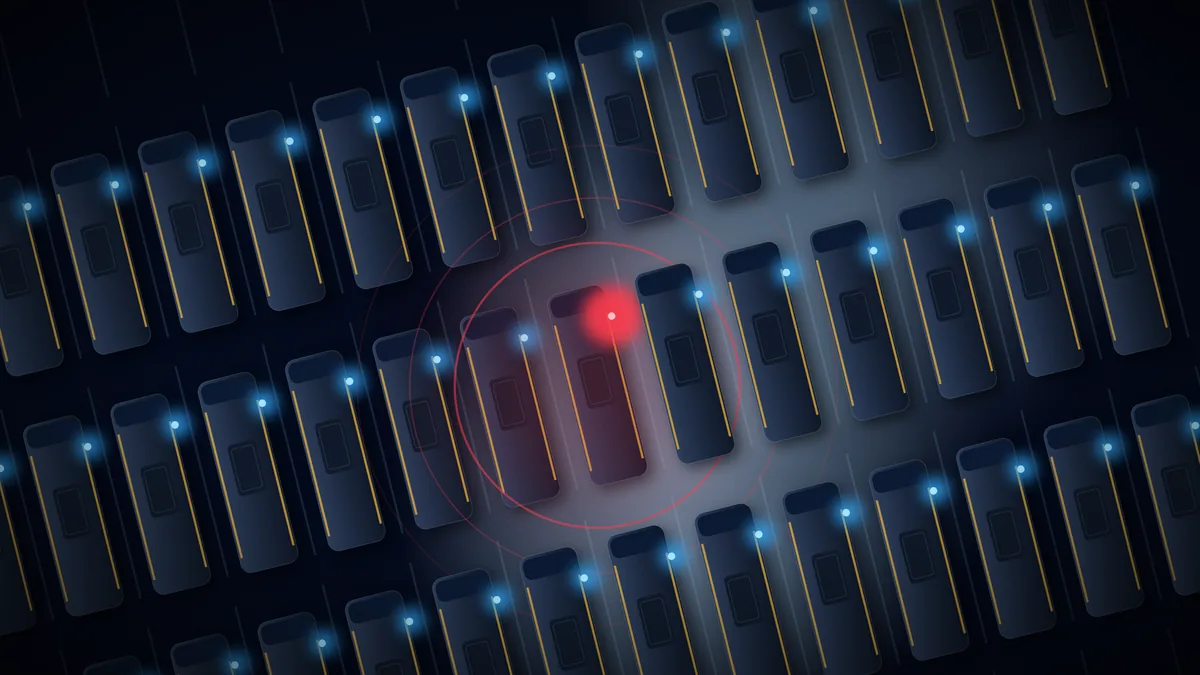
Working prototype with ESP32 controller, Time-of-Flight sensors, live display, audible alert, and enclosure iterations.
On-vehicle validation, installation refinement, heat/vibration testing, driver workflow testing, and failure-mode assessment.
Vehicle-grade components, improved enclosure, wiring protection, documented quality checks, and design-for-manufacture.
Fleet dashboard, alert logs, GPS integration, mobile notifications, and other enhancements following successful core-product validation.


Last 1 is a smart bus safety technology venture founded by Mohamed Sharif in the Kingdom of Bahrain. The company has developed a working prototype that automatically counts passengers as they enter and exit a bus, continuously reconciles the total, and triggers a safety alert if anyone remains onboard at route completion.
Founder and Inventor
Mohamed Sharif conceived, designed, built, and programmed the Last 1 system in Bahrain. He leads product design, firmware development, sourcing, prototyping, business development, and customer relationships.
Founder-led technical development supported by specialist advisory input.
Door-mounted Time-of-Flight sensors detect each passenger entering or exiting. The onboard controller keeps a running balance, and at route completion it checks that the count is zero. If it is not, the system triggers a loud audible alarm and a visual alert for the driver.
No. Last 1 counts physical passenger movement. No cards, tags, phones, or passenger actions are required for core counting.
No. The core safety function operates locally and does not require persistent internet connectivity.
The current design counts anonymous movements rather than capturing names or images.
It is designed as a compact retrofit for existing bus doors with minimal disruption. Sensor placement, power connection and mounting are agreed after a vehicle-specific site assessment and approvals.
Indicative packages are 10 BHD (Basic, 1-5 buses), 15 BHD (Standard, 6-15 buses) and 20 BHD (Premium, 16+ buses) per month, with installation included. Final pricing, taxes, contract length and reporting requirements are confirmed in a formal proposal.
Last 1 has a working prototype that demonstrates the core sensing, processing, display and alert functions. The next stage is a controlled pilot with a school, transport operator or organisation, followed by product hardening.
Book a 30-minute collaboration meeting with your transport, safeguarding, and operations representatives. We will present the working prototype, discuss your fleet requirements, and agree whether a pilot is suitable.
Proposed next step
Bring your transport, safeguarding, and operations representatives. We will present the working prototype, discuss your fleet requirements, and agree whether a pilot is suitable.
Send a message
Write it here and it opens in WhatsApp, ready to send to Mohamed. Nothing is stored on this site.